Most restaurants lose money due to poorly designed menus: dishes that don’t sell, dishes with low margins, and descriptions that don’t help guests decide. With just a few simple adjustments—based on real data—you can turn your menu into a profitability machine.
Key Points
- Optimizing your menu can increase profits by 15% to 30%.
- Google reveals what dishes people are searching for in your city—use it to build a menu that captures real demand.
- The visual structure of a menu directly influences which dishes sell more.
- Sensory descriptions and evocative names increase sales by +27%.
- A successful menu is reviewed every 3 months.
- Fewer dishes = less waste and higher average ticket.
1. Align your menu with what people are looking for today
Before thinking about photos or prices, you need to answer:
👉 Does your menu include the dishes your customers are actually searching for?
The most practical (and free) way to find out is by using Google data.
Recommended tool
Google Keyword Planner (free): With this tool you can discover which dishes/food categories consumers in your city are searching for.
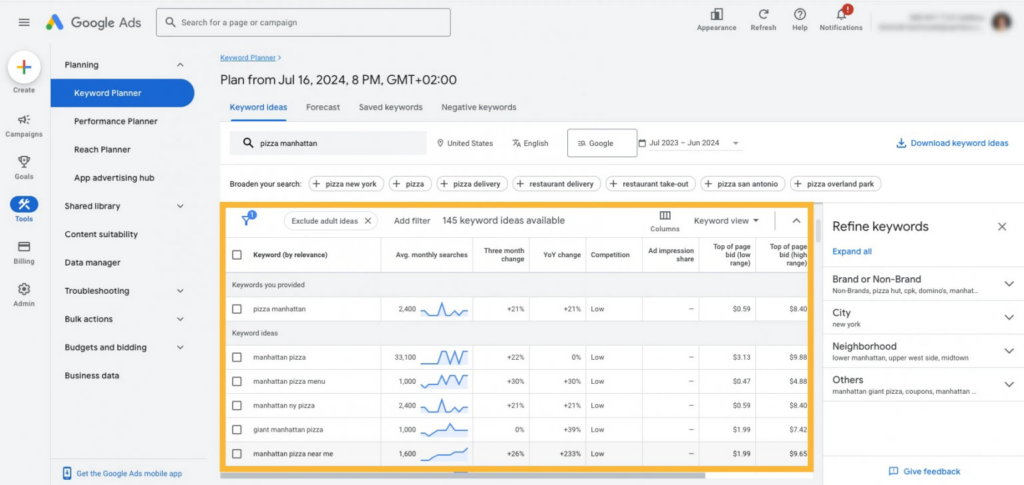
How to use it in 60 seconds:
- Open Google Keyword Planner
- Select your country and city
- Search for terms like “tacos,” “empanadas,” “ramen,” etc.
- Identify high demand with low local supply
Real example
Thousands search for “tacos birria in Miami” → Few restaurants offer them.
→ That dish could become your next star.
How to capture that demand:
- Add the dish to your menu
- Create a page like: “Best birria tacos in [your city]”
- Enable online ordering or reservations
- Promote it from your Google Business Profile
2. Identify which dishes actually generate profit
A menu is a business tool—not just a list of dishes. To make smart decisions, categorize items into four groups:
⭐ Stars
Profitable + very popular
→ These should be menu highlights.
🐴 Workhorses
Very popular + low margin
→ Adjust portion size, ingredients or pricing.
🧩 High Potential
Profitable + not ordered often
→ Improve photo, description, or placement.
💀 Dead Items
Neither profitable nor popular
→ Remove or reinvent.

What data you need:
- Price
- Cost
- Sales from the last 30 days
With that, you can automatically categorize your menu.
Download the spreadsheet to classify your dishes
In the video, I mention a ready-made Excel/Google Sheets template that automatically categorizes your dishes based on sales, margin, and popularity.
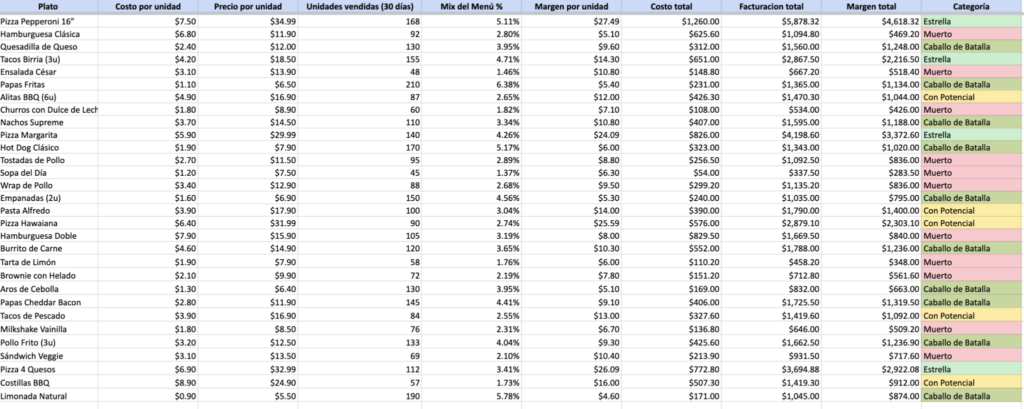
Menu Item Classification Template
This sheet allows you to:
- Enter price, cost, and sales
- Calculate margin per dish
- Automatically identify:
- ⭐ Stars
- 🐴 Workhorses
- 🧩 High Potential
- 💀 Dead Items
- Make decisions based on real data
- Reduce waste and increase margins
3. Use the “Z” reading pattern
Guests’ eyes move across a menu in a Z-shaped path:
- Top left
- Top right
- Center diagonal
- Bottom right
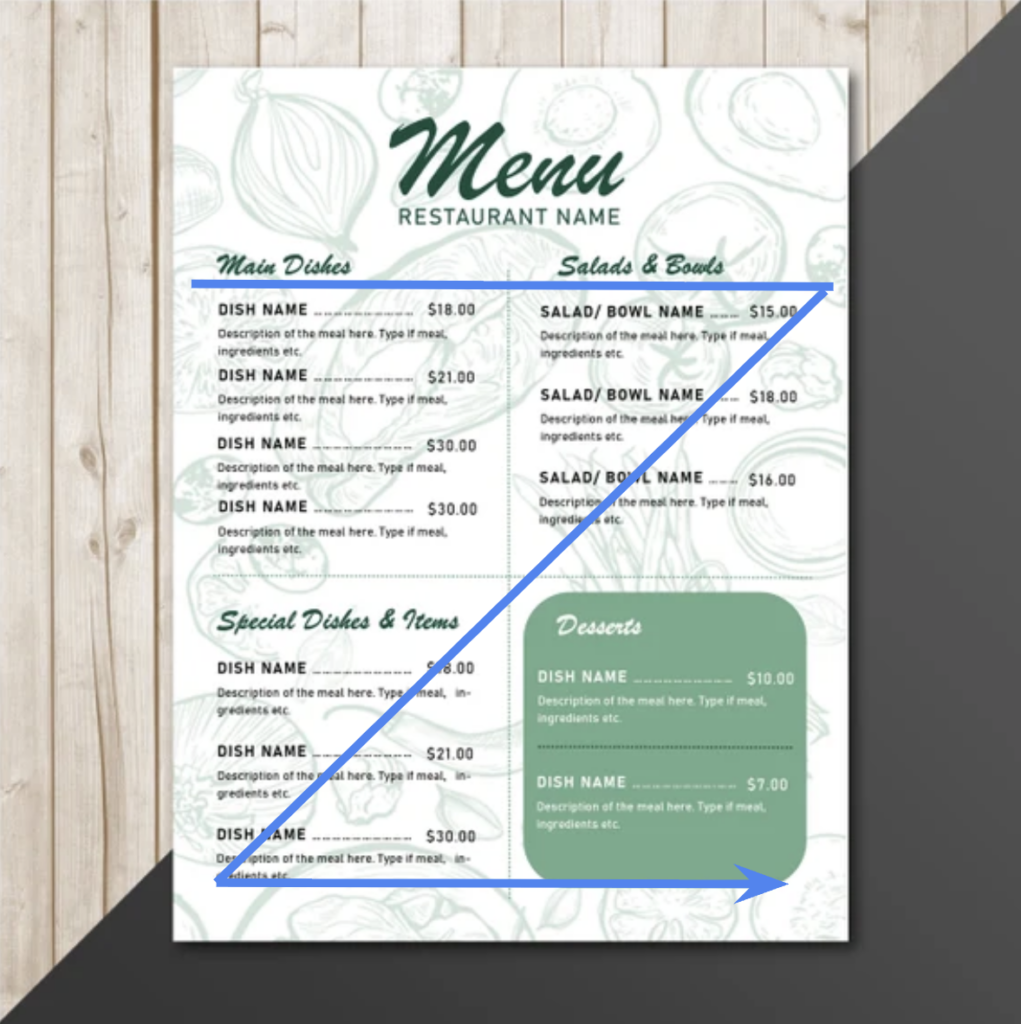
These four points are high-selling hotspots.
What to place in each spot:
- Stars: top right / bottom right
- High Potential: central diagonal
- Workhorses: less visible areas
- Dead Items: out of focus
Visual tricks that work:
- Simple boxes
- Selective bolding
- One photo per section
- Clear icons (⭐ recommended, 🌶️ spicy, 🥦 veggie)
This technique blends consumer psychology with menu design.
4. Irresistible descriptions + smart pricing
Words sell. In fact:
📊 Real data:
- Evocative descriptions increase sales +27%
(Cornell Food & Brand Lab) - Customers perceive higher quality with sensory descriptions
- Nostalgic or evocative names increase purchase intent
(Journal of Retailing and Consumer Services)
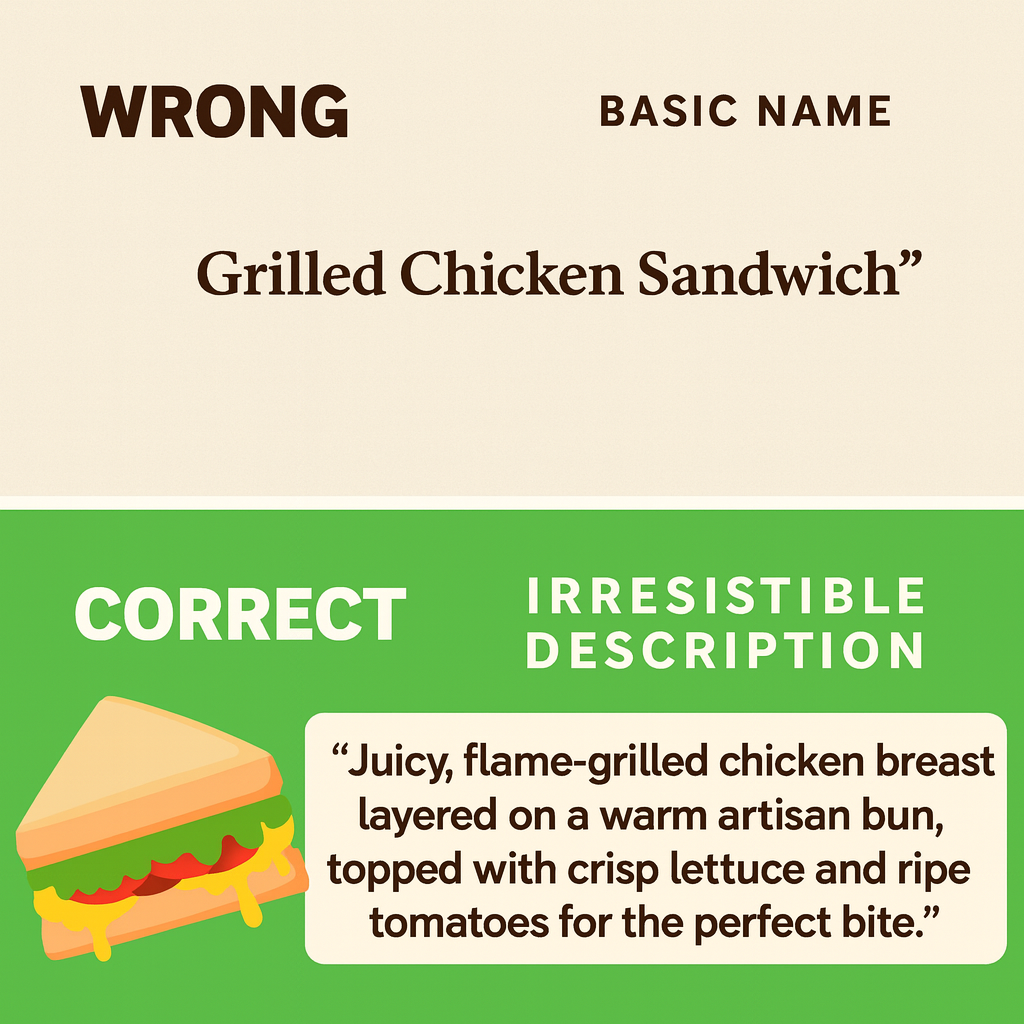
Example:
❌ Grilled chicken
✔️ 24-hour marinated chicken breast, grilled to perfection
This alone can increase sales by 20–30%.
Pricing strategies that increase your average ticket
The most profitable restaurants apply these rules:
- Don’t use the $ symbol
- Place the price at the end of the description
- Avoid price columns
- Avoid price-aligned lists
This reduces “price comparison thinking” and increases the average ticket.
5. Review your menu every 3 months
Your menu isn’t static—
it’s a living system that must evolve.
Each quarter, review:
- Are your Stars still Stars?
- Did High Potential items improve?
- Can Workhorses become more profitable?
- Any dishes to remove or reinvent?
- Any cost leakage?
- Is staff recommending the right items?
Successful restaurants iterate constantly.
Conclusion
Optimizing your menu is one of the most powerful and underestimated strategies to boost profitability.
You don’t need to remodel your restaurant, change operations, or invest in advertising:
👉 Just adjust what you already have so it sells better.
And it works fast.
See how your restaurant’s website stacks up against local competitors