Artificial intelligence is no longer a futuristic concept reserved for tech giants. In 2026, AI tools have become accessible, affordable, and genuinely useful for restaurants of every size. From the corner cafe to a 20-location chain, operators are using AI to win back time, recover lost revenue, and deliver experiences that keep guests coming back.
The question is no longer whether to adopt AI in your restaurant, but which use cases will move the needle for your business this year. Below are seven practical applications you can put to work right now — no data science team required.
1. Automated review responses that sound like you
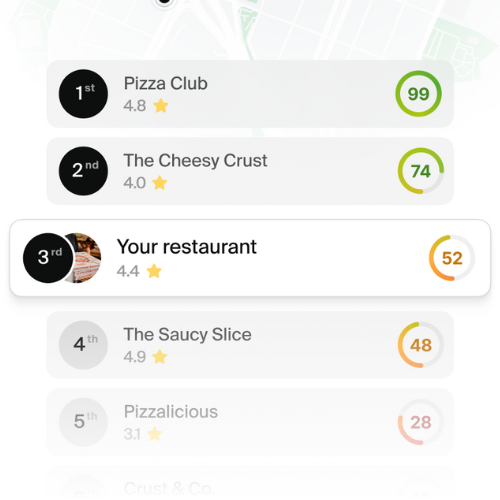
Online reviews are one of the strongest ranking signals for Google Business Profile, and replying to every review can lift your local search visibility by double digits. The problem: most owners simply don’t have the time. AI assistants can now draft on-brand replies to every Google, TripAdvisor, and Yelp review in seconds, flag the ones that need a human touch, and keep your tone consistent across hundreds of interactions.
Why it matters
Restaurants that respond to at least 80% of their reviews see, on average, a meaningful increase in profile visits and direction requests. AI removes the bottleneck that keeps most operators stuck below that threshold.
2. Demand forecasting and smarter prep
Modern AI models can ingest your past sales, weather forecasts, local events, and even nearby foot traffic to predict demand by day-part with surprising accuracy. The result: less over-prep, less waste, and fewer 86’d items during the rush.
- Sharper purchasing and prep lists
- Lower food cost as a percentage of sales
- Better staffing decisions for predictable peaks and valleys
3. Menu engineering that pays for itself
Most menus carry items that quietly drag down profitability. AI menu engineering tools analyze your POS data to classify each item as a star, workhorse, puzzle, or dog — and then suggest specific actions, from repricing to repositioning on the menu, to remove poor performers entirely.
4. Personalized marketing at scale
Generic email blasts are dying. AI-driven CRMs can now segment your guest list by visit frequency, average ticket, and product preferences, then automatically send the right offer to the right guest at the right moment. A first-time visitor gets a “welcome back” reminder; a lapsed regular gets a “we miss you” incentive.
5. AI agents that handle phone reservations and orders
Voice AI has crossed the quality threshold where guests genuinely cannot tell the difference. Restaurants in 2026 are using AI agents to take reservations, answer FAQs about hours and menu items, and even capture takeout orders — 24 hours a day, with no missed calls. That recovers revenue every operator was leaving on the table.
6. Computer vision in the kitchen
Cameras combined with computer vision can now monitor plating consistency, ticket times, and even portion sizes. For multi-unit operators, this is a game-changer for quality control without the cost of a traveling QA team.
7. Smart tools to fight third-party commission fees
Delivery commissions of 25 to 30% are a margin killer. AI helps restaurants build their own direct ordering channels by optimizing pricing, suggesting upsells in real time, and predicting which guests are ready to switch from a marketplace to your own website or WhatsApp ordering flow.
How to get started without overcommitting
You don’t need to overhaul your tech stack. Pick one use case from the list that maps to your biggest pain point — usually reviews, demand forecasting, or commission-free ordering — and run a 60-day pilot. Measure the impact, then layer in the next.
- If your reviews are unanswered: start with AI-assisted responses.
- If your food cost is climbing: start with demand forecasting.
- If delivery commissions are eating your margin: start with a direct ordering channel.
The bottom line
AI is no longer optional infrastructure for restaurants that want to grow profitably. The operators winning in 2026 are not the ones with the most technology — they are the ones who pick the right two or three tools and execute them consistently.
RAY helps restaurants put AI to work where it matters most: automated review management, Google Business Profile optimization, and commission-free direct ordering. If you want to see what AI can unlock for your restaurant, get started with RAY.