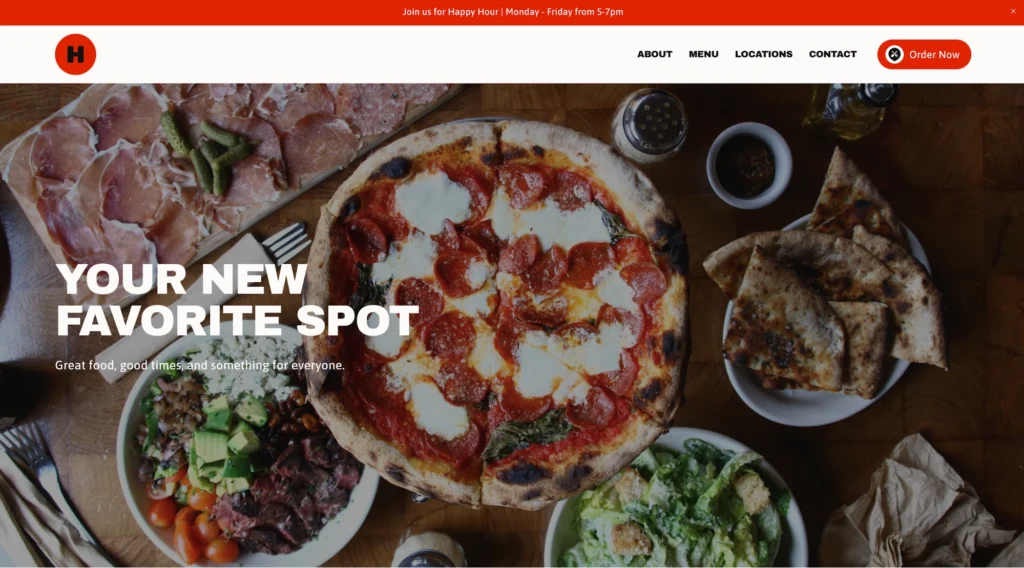
What do guests really want when they visit restaurant websites? To answer that question, we surveyed guests to understand how they browse, decide, and ultimately choose where to order. Here are the 6 most important insights and what you can do about each one. Key takeaways What guests want from a restaurant website Most restaurant owners have strong opinions about their websites.Some believe social media matters most.Others think third-party apps do all the heavy lifting. But until recently, there was very little data on how guests actually use restaurant websites. We surveyed 1,300 guests in the U.S. to understand: The results were clear and surprisingly consistent. Below are the six biggest takeaways. Takeaway 1: Google search is the top way guests discover restaurants What the data says 66% of guests prefer Google search when looking for new restaurants.Google beats delivery apps and restaurant directories combined. When guests are hungry and want something new, they go to Google first. What to do about it Examples of common searches include: Your homepage should target the cuisine.Your menu pages should target the dishes. Takeaway 2: 91% of guests visit your website before ordering What the data says 91% of guests visit a restaurant’s website before ordering takeout or delivery. Your website is often your first impression.And sometimes, your only one. What to do about it Your homepage needs to answer two questions immediately: Example:“Our family’s handmade Sicilian recipes in San Francisco, California.” Even restaurants without online ordering benefit from doing this well. 72% of guests visit your website before dining in What the data says 72% of guests check a restaurant’s website before visiting in person. This includes guests who plan to dine in. Why it matters Even if most of your business is on-premise, guests still want to: Your website plays a key role in that decision. Takeaway 3: Guests expect to see a menu and order from it What the data says The menu is the center of the website experience. What to do about it Invest more time in your online menu than any other section of your site. Three essentials: 80% of guests visit your website mainly to see the menu What the data says 80% of guests say the primary reason they visit a restaurant website is to view the menu. No other reason comes close. Common mistake Using PDF menus with no photos that are hard to read on mobile. This creates friction and uncertainty, especially for first-time guests. Your menu should be: 84% of guests look at menu photos before ordering What the data says 84% of guests review menu photos before deciding whether to order. Photos are not optional.They are a decision driver. What to do about it Guests are used to the visual layouts of major brands and delivery apps. Familiar designs work. Takeaway 4: 75% of guests abandon orders due to poor website experiences What the data says A poor website experience directly costs you sales. Where to focus Takeaway 5: 87% of guests reorder more from great websites What the data says 87% of guests say they are more likely to reorder if the online experience is great. Repeat guests value smooth experiences even more than first-time visitors. Why this matters Many restaurants make little profit on the first order.The second and third orders are where profitability improves. If the experience is slow or frustrating, guests rarely return. Takeaway 6: 3 out of 4 guests look for reviews or offers What the data says 74% of guests look for reviews or ratings on a restaurant’s website. Guests trust third-party platforms, but they also want reassurance directly from you. Guests also look for deals 74% of guests check restaurant websites for special offers before ordering. Examples that perform well: What a great restaurant website looks like today Most restaurant owners fall into one of two categories: The data shows the answer is simpler. Guests want: You do not need to reinvent anything.You just need to execute the fundamentals well. There are only a few things that truly matter on a restaurant website.But when you get them right, the impact is significant.