Restaurants that grow consistently don’t rely only on delivery apps or aggressive discounts.They rely on something far more powerful: customer loyalty. Global data shows learly and repeatedly that a strong loyalty program increases sales, boosts visit frequency, and turns the direct channel into the most profitable engine of the business. Key Takeaways 1. Customers love earning points 78% percent of consumers are more likely to visit a restaurant if they can earn points or rewards there. 2. Members spend significantly more Loyalty members spend 38% more per visit than non members. 3. Members visit more often 4. Loyalty drives restaurant traffic Loyalty traffic has doubled (x2) since 2019 and now represents 39% of all restaurant visits. 5. Loyalty fuels annual revenue growth Top loyalty programs deliver the following results. 6. Millennials lead the adoption 54.7 % of millennials actively participate in restaurant loyalty programs. 7. Customers belong to multiple programs Consumers belong to an average of 3.6 restaurant loyalty programs. 8. Loyalty increases online ordering 45% of consumers would order online more often if loyalty rewards were included. 9. Loyalty motivates direct ordering 36% of consumers prefer ordering directly from restaurants to earn points. 10. Delivery apps reduce margins Delivery platforms charge 15% to 30% commissions and real costs can reach over forty percent after fees. 11. Automation adoption is rising 12. Customers expect personalization 74% of consumers expect personalized experiences across email, SMS, and digital channels. 13. Email and SMS deliver massive ROI Conclusion A well-executed loyalty program is one of the highest ROI tools a restaurant can implement.Loyalty strengthens the direct ordering channel, increases visit frequency, boosts revenue, and enables real personalization and automation across all marketing efforts. The real question is not whether you should have a loyalty program.The real question is this:How much are you losing by not having one?
10 most important restaurant POS in Latin America
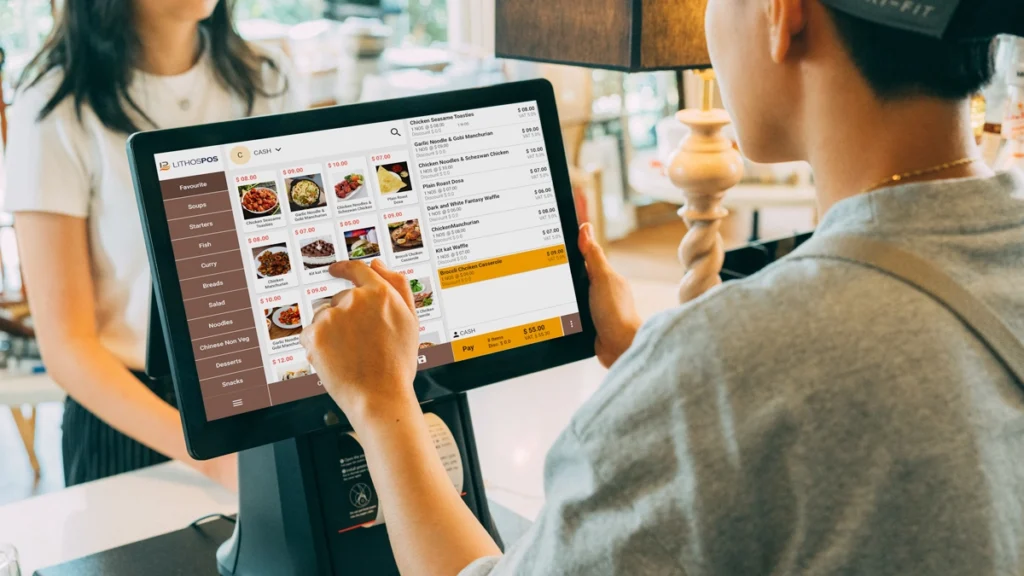
Choosing the right restaurant POS system in Latin America is not easy. Each country has different regulations, tax environments, payment ecosystems, and delivery platforms. A modern restaurant POS must do far more than process payments — it needs to: Across Mexico, Argentina, Colombia, Brazil, and Chile, the POS you choose will directly impact: ✔ margins✔ operational efficiency✔ speed of service✔ scalability After reviewing 20+ systems, we selected the 10 most important POS platforms in Latin America, based on: This is not simply a list of the “most popular” systems — it blends scale, innovation, and strategic relevance in the region. 1. Soft Restaurant (México) Clientes estimados: 42.000+ restaurantes Estimated clients: 42,000+ restaurants Soft Restaurant is one of the most established POS systems in Latin America. Known for reliability and robust inventory control, it is widely used by mid-market and enterprise-level operators. Strengths Weaknesses Best for: medium and large restaurant groups in Mexico with complex operations. 2. Fudo (México, Colombia, Chile,Arg.) Estimated clients: 30,000+ businesses Fudo has become the go-to cloud POS for independent restaurants and mid-market chains across Argentina, Mexico, Colombia, and Chile. Strengths Weaknesses Best for: modern multi-location concepts operating across multiple Latin American markets. 3. Vendty (Colombia – LatAm) Estimated clients: 10,000+ businesses Vendty excels by offering an end-to-end platform: POS + inventory + online store + delivery hub. Strengths Weaknesses Best for: restaurants with high delivery volume and strong cost-control needs. 4. Toteat (Chile – LatAm) Estimated clients: 4,500 restaurants / 250,000+ active users Toteat is one of the few POS systems in Latin America that includes loyalty and CRM as native modules. Strengths Weaknesses Best for: brands that want an all-in-one POS with built-in loyalty and marketing. 5. Consumer (Brasil) Estimated clients: 30,000+ restaurants Consumer is a dominant player in Brazil, largely due to its deep integration with iFood, the country’s largest delivery platform. Strengths Weaknesses Best for: Brazilian restaurants with heavy delivery operations. 6. Saipos (Brasil) stimated clients: 10,000+ restaurants Saipos is gaining traction in Brazil as a lightweight, cloud-native POS optimized for delivery workflows. Strengths Weaknesses Best for: delivery-focused restaurants looking for a simple, modern system. 7. Poster POS (Global – LatAm) Estimated clients: 27,000+ businesses in 110 countries Poster is a global POS with strong adoption in Latin America due to its simplicity, multilingual support, and easy scaling. Strengths Weaknesses Best for: restaurant groups operating across several countries. 8. Maxirest (Argentina) Estimated clients: 25,000+ users Maxirest is widely used by restaurants with complicated inventory structures, production workflows, and precise cost control needs. Strengths Weaknesses Best for: enterprise-style operations with heavy back-of-house complexity. 9. Parrot (México) Estimated clients: 1,000+ restaurants Parrot has quickly become a favorite among delivery-first brands in Mexico thanks to its modern architecture and payment integrations. Strengths Weaknesses Best for: restaurants in Mexico prioritizing delivery efficiency. 10. Thinkion (Argentina) Estimated clients: <100 publicly documented (but growing quickly) Thinkion is an emerging player with a modern UI, strong omnichannel tools, and delivery integrations. Strengths Weaknesses Best for: restaurants seeking a next-generation POS alternative similar to U.S. cloud systems. Conclusions & Recommendations The most widely adopted, full-featured POS in LATAM ➡️ Soft Restaurant Best cloud POS for multi-country operators ➡️ Fudo Best omnichannel POS (delivery + online ordering + inventory) ➡️ Vendty Best POS with built-in CRM and loyalty ➡️ Toteat Best for Brazil’s delivery-heavy market ➡️ Consumer (robust)➡️ Saipos (cloud-first) Best for multi-country chains ➡️ Poster POS Best for complex inventory and back-of-house control ➡️ Maxirest Best for delivery-first restaurants in Mexico ➡️ Parrot Best emerging POS with modern UX ➡️ Thinkion
How to Make ChatGPT Recommend Your Restaurant
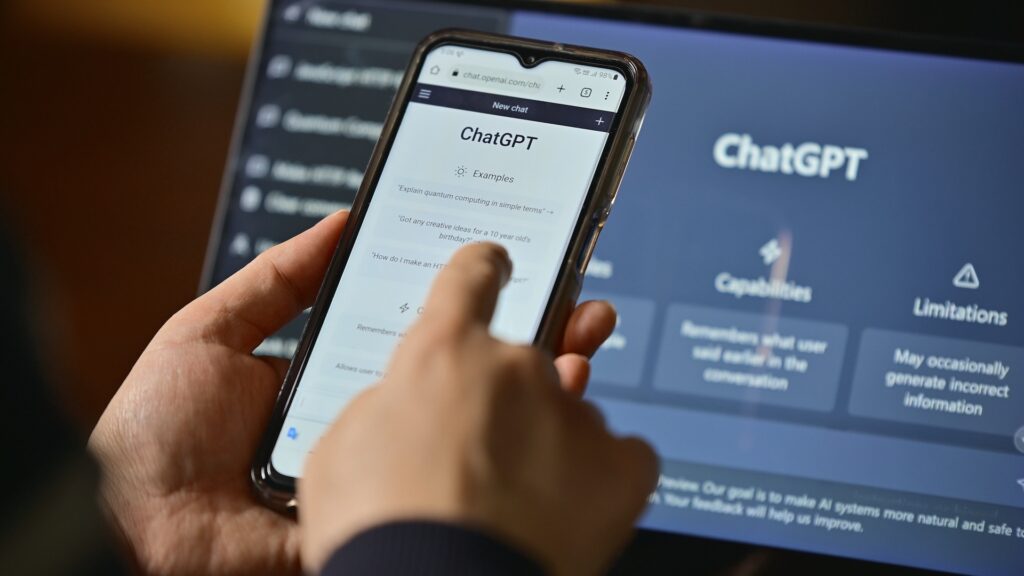
AI assistants like ChatGPT, Gemini, and Claude are becoming the new way customers discover where to eat. Every day, millions of diners ask: If your restaurant doesn’t show up in these answers, you’re losing potential customers without realizing it. Before diving into the full guide, here are the Key Takeaways: Key takeaways Why AI Recommendations Matter AI is becoming the new decision layer for diners: 1. 67% of consumers say they’ve asked an AI tool for restaurant suggestions in the past year 2. 1 in 3 diners trust AI recommendations as much as Google Maps or friends Key finding: 3. ChatGPT analyzes websites & Google Business Profile Google Search Generative Experience (SGE) Overview Google AI uses this data for AI-assisted search uses: Perplexity AI – Transparency Report Perplexity explicitly cites: The 5 Signals AI Uses to Recommend Restaurants AI assistants don’t rank restaurants the way Google does. Instead, they synthesize recommendations using trust signals: 1. Your Website (Structure + Content Quality) AI tools scan your website for: If your website is slow, confusing, or missing fields, AI models downgrade trust. 2. Google Business Profile (GBP) AI assistants treat your GBP like your official identity They extract: 3. Online Reviews (Across All Platforms) AI doesn’t just look at star ratings—it analyzes: A few negative themes repeated often will hurt your chances of being recommended. 4. Menu Data AI assistants love structured, readable menu information. Your menu should include: 5. External Signals AI also checks: If the internet hardly talks about you, AI has fewer reasons to mention you. How to Optimize Your Restaurant for ChatGPT and Other AI Assistants Below is the full checklist to increase your chances of being recommended. 1. Build a Website AI Assistants Can Understand Add a clear “About the Restaurant” paragraph. Example: “Temple Burger is a craft burger restaurant in Wynwood specializing in smash burgers, milkshakes, and late-night service. Guests love the Double Smash, Truffle Fries, and Oreo Milkshake.” This gives models context and keywords. Publish your menu in clean HTML. Avoid PDFs. Include: Add schema markup (Restaurant + Menu). This is a major AI visibility boost. Schema should include: RAY Websites include this automatically. 2. Optimize Your Google Business Profile Ensure every field is filled: Update GBP weekly to signal freshness. 3. Improve Review Quality to Influence AI Understanding AI models analyze review sentiment and topics. You can guide this by asking customers to mention: Example request: “If you loved your visit, tell us which dish you ordered! It helps future guests and AI tools discover us.” This shapes the narrative AI uses. 4. Make Your Menu AI-Friendly Add sensory language and context. Bad Chicken Sandwich – Chicken, lettuce, tomato. AI-Optimized Spicy Crispy Chicken SandwichCrispy fried chicken breast, chipotle mayo, pickles, brioche bun.🔥 Our most popular lunch item. AI models love: 5. Publish Content AI can cite AI assistants often reference articles and blog posts. You can boost topical authority by writing: This content helps AI tools understand: 6. Add Location Pages Each location needs its own optimized page with: AI loves hyper-local relevance. 7. Ensure Consistent Data Everywhere Your: …must match across all platforms. Inconsistent data = AI confusion = fewer recommendations. 8. Use AI Search Tools to Audit Your Visibility Tools like the RAY Grader show: Conclusion: AI Is the New Menu Board — Make It Work for You Restaurant discovery is shifting fast.Customers will soon rely on AI assistants as much as they rely on Google. If you want ChatGPT (and all AI models) to recommend your restaurant, you need: Restaurants that adapt now will dominate this new discovery channel.