
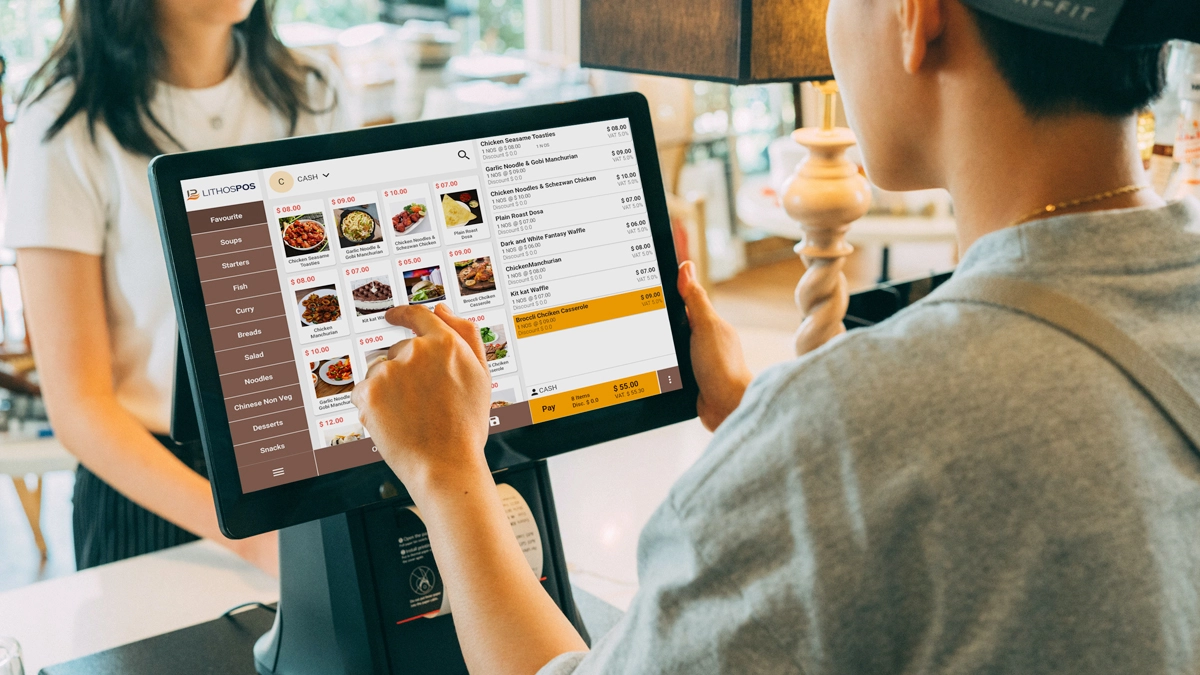
Choosing the right restaurant POS system in Latin America is not easy. Each country has different regulations, tax environments, payment ecosystems, and delivery platforms. A modern restaurant POS must do far more than process payments — it needs to:
- manage inventory and recipe costs
- integrate with third-party delivery apps
- enable online ordering and QR menus
- support multiple locations
- streamline kitchen operations
- power loyalty programs and marketing automation
Across Mexico, Argentina, Colombia, Brazil, and Chile, the POS you choose will directly impact:
✔ margins
✔ operational efficiency
✔ speed of service
✔ scalability
After reviewing 20+ systems, we selected the 10 most important POS platforms in Latin America, based on:
- real market adoption
- regional presence
- product maturity
- functional relevance (inventory, omnichannel, delivery, CRM)
- traction among independent restaurants and multi-location groups
This is not simply a list of the “most popular” systems — it blends scale, innovation, and strategic relevance in the region.
1. Soft Restaurant (México)
Clientes estimados: 42.000+ restaurantes
Estimated clients: 42,000+ restaurants
Soft Restaurant is one of the most established POS systems in Latin America. Known for reliability and robust inventory control, it is widely used by mid-market and enterprise-level operators.
Strengths
- Extremely strong inventory and recipe costing
- Native integration with Tuki for loyalty
- Built-in electronic invoicing (CFDI)
- Highly stable for large operations
Weaknesses
- On-premise (Windows-based)
- Not a native omnichannel system
- Legacy interface
Best for: medium and large restaurant groups in Mexico with complex operations.

2. Fudo (México, Colombia, Chile,Arg.)
Estimated clients: 30,000+ businesses
Fudo has become the go-to cloud POS for independent restaurants and mid-market chains across Argentina, Mexico, Colombia, and Chile.
Strengths
- 100% cloud
- Integrations with Uber Eats, Rappi, PedidosYa, Didi
- Built-in online ordering
- Multi-location dashboards
- Fast onboarding and training
Weaknesses
- CRM and loyalty require third-party tools
- Delivery integrations differ by country
Best for: modern multi-location concepts operating across multiple Latin American markets.

3. Vendty (Colombia – LatAm)
Estimated clients: 10,000+ businesses
Vendty excels by offering an end-to-end platform: POS + inventory + online store + delivery hub.
Strengths
- Commission-free online store
- Delivery hub that centralizes multiple apps
- Inventory with recipes and sub-recipes
- Offline-mode desktop app
- Integration with Siigo (Colombia)
Weaknesses
- Interface less modern than newer cloud competitors
- CRM capabilities are basic
Best for: restaurants with high delivery volume and strong cost-control needs.

4. Toteat (Chile – LatAm)
Estimated clients: 4,500 restaurants / 250,000+ active users
Toteat is one of the few POS systems in Latin America that includes loyalty and CRM as native modules.
Strengths
- POS + inventory + CRM + promotions
- Integrations with Uber Eats, Rappi, PedidosYa
- Real-time reporting
- Strong adoption among Chilean restaurant chains
Weaknesses
- Limited regional expansion compared to competitors
- Some advanced features require higher-tier plans
Best for: brands that want an all-in-one POS with built-in loyalty and marketing.

5. Consumer (Brasil)
Estimated clients: 30,000+ restaurants
Consumer is a dominant player in Brazil, largely due to its deep integration with iFood, the country’s largest delivery platform.
Strengths
- Native, highly reliable iFood integration
- Proven stability for high-volume restaurants
- Strong recipe and inventory tools
- Excellent fit for pizzerias, bars, and dark kitchens
Weaknesses
- Portuguese only
- Limited CRM and marketing features
Best for: Brazilian restaurants with heavy delivery operations.

See how your restaurant’s website stacks up against local competitors
Scan your restaurant
6. Saipos (Brasil)
stimated clients: 10,000+ restaurants
Saipos is gaining traction in Brazil as a lightweight, cloud-native POS optimized for delivery workflows.
Strengths
- Integrates with iFood and Rappi
- Simple, intuitive interface
- Scales easily to multiple units
- Fast implementation
Weaknesses
- Primarily focused on Brazil
- Limited built-in CRM
Best for: delivery-focused restaurants looking for a simple, modern system.

7. Poster POS (Global – LatAm)
Estimated clients: 27,000+ businesses in 110 countries
Poster is a global POS with strong adoption in Latin America due to its simplicity, multilingual support, and easy scaling.
Strengths
- Tablet-based POS (iPad & Android)
- Extremely easy to use
- Built-in online ordering (“Poster Shop”)
- Ideal for multi-country operations
Weaknesses
- Delivery integrations are less local-specific
- CRM is basic
Best for: restaurant groups operating across several countries.

8. Maxirest (Argentina)
Estimated clients: 25,000+ users
Maxirest is widely used by restaurants with complicated inventory structures, production workflows, and precise cost control needs.
Strengths
- Advanced inventory and recipe costing
- Production and kitchen display modules
- Highly stable for high-volume operations
Weaknesses
- On-premise architecture
- No native online ordering or delivery
Best for: enterprise-style operations with heavy back-of-house complexity.

9. Parrot (México)
Estimated clients: 1,000+ restaurants
Parrot has quickly become a favorite among delivery-first brands in Mexico thanks to its modern architecture and payment integrations.
Strengths
- Deep integration with delivery apps
- Fully cloud-based
- Integrated payments
- Rapid adoption among modern concepts
Weaknesses
- Inventory module is less advanced
- CRM remains limited
Best for: restaurants in Mexico prioritizing delivery efficiency.

10. Thinkion (Argentina)
Estimated clients: <100 publicly documented (but growing quickly)
Thinkion is an emerging player with a modern UI, strong omnichannel tools, and delivery integrations.
Strengths
- Very modern user experience
- Integrations with major delivery apps
- Basic CRM and promotions included
- Great for multi-unit independents
Weaknesses
- Smaller client base
- Less mature than older systems
Best for: restaurants seeking a next-generation POS alternative similar to U.S. cloud systems.

Conclusions & Recommendations
The most widely adopted, full-featured POS in LATAM
➡️ Soft Restaurant
Best cloud POS for multi-country operators
➡️ Fudo
Best omnichannel POS (delivery + online ordering + inventory)
➡️ Vendty
Best POS with built-in CRM and loyalty
➡️ Toteat
Best for Brazil’s delivery-heavy market
➡️ Consumer (robust)
➡️ Saipos (cloud-first)
Best for multi-country chains
➡️ Poster POS
Best for complex inventory and back-of-house control
➡️ Maxirest
Best for delivery-first restaurants in Mexico
➡️ Parrot
Best emerging POS with modern UX
➡️ Thinkion
