The restaurant business has always been a hospitality business, but in 2026 the definition of hospitality has changed. Guests now judge your restaurant before they even sit down — based on how easy your website is to use, how fast their delivery arrives, and how personalized their loyalty rewards feel. Building a memorable customer experience is no longer optional; it is the single biggest lever to grow online sales, fill more tables, and stop losing margin to third-party platforms.
This guide breaks down the customer experience touchpoints that matter most this year and the practical steps you can take to win them.
Why Customer Experience Drives Restaurant Growth in 2026
Recent industry research shows that more than 70% of guests will not return after a single bad experience, and over 60% will share that experience publicly on Google or social media. On the upside, restaurants that score in the top quartile of guest satisfaction grow revenue at roughly twice the rate of the rest of the market. The math is simple: experience is now the most important growth channel a restaurant has.
The good news is that experience is no longer a mystery. With the right tools, you can measure every step of the guest journey and improve it without hiring a single new person.
The 6 Touchpoints That Define Restaurant Experience Today
1. Discovery on Google and AI Search
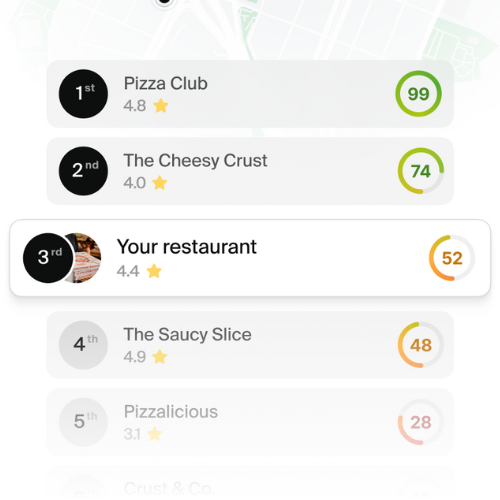
Most guests still find a new restaurant on Google Maps or, increasingly, by asking an AI assistant. Make sure your Google Business Profile is fully optimized: updated hours, real photos of your dishes, a menu link, and a steady flow of fresh reviews. If your profile is incomplete, you are losing customers before they ever see your food.
2. Your Website and Online Menu
A guest who clicks from Google to your website wants three things in under five seconds: the menu, the hours, and a way to order or book. Slow, cluttered websites quietly kill sales. Aim for sub-two-second load times on mobile, large readable menu prices, and a single primary call-to-action above the fold.
3. Online Ordering and Delivery
Guests want fast, reliable delivery — and they prefer ordering directly from the restaurant when the experience is as smooth as a marketplace. Direct ordering protects your margins (no 25-30% commission) and gives you the customer data you need to bring them back. The key is to match the user experience that delivery apps have trained your guests to expect: real-time tracking, clear ETAs, and one-tap reordering.
4. In-Restaurant Service
Technology should remove friction, not add it. QR menus, contactless payment, and tableside ordering only work when they are faster than waving down a server. Train your team to use these tools as accelerators, not replacements for warmth. Every guest should still feel recognized.
5. Loyalty and Personalization
Generic punch-card loyalty is dead. Modern guests expect a program that knows their name, remembers their last order, and offers a reward that fits their habits. Restaurants that send personalized offers based on order history see redemption rates 3-5x higher than those running flat discounts.
6. Post-Visit Feedback and Reviews
The experience does not end when the guest leaves. A simple, well-timed feedback request — sent by SMS or WhatsApp 60-90 minutes after the visit — gives you a chance to recover unhappy guests privately and route happy guests to leave a public Google review. Done well, this single workflow can double your monthly review volume.
How to Measure Customer Experience Without Guessing
You cannot improve what you do not measure. Track these four numbers monthly:
- Google rating and review volume — your public reputation score.
- Repeat customer rate — what percentage of guests return within 60 days.
- Direct order share — how many of your online orders skip third-party apps.
- Net Promoter Score (NPS) — collected via a one-tap post-visit survey.
If any of these numbers dip, you have a clear signal of where the experience is breaking down.
Common Mistakes to Avoid
- Treating delivery apps as your main channel. They own the customer relationship, not you.
- Asking for reviews too late. Within two hours of the visit is the sweet spot.
- Ignoring negative reviews. A thoughtful public reply can turn a one-star into a returning guest.
- Running loyalty without data. If you cannot tell who your top 20% of guests are, your program is leaking money.
Putting It All Together with RAY
RAY helps restaurants run every one of these touchpoints from a single platform — Google Business optimization, a fast direct ordering site, commission-free delivery and bookings, an integrated loyalty program, and automated review and feedback workflows. The result is a customer experience that feels seamless to your guests and profitable to you.
If you are ready to stop renting your customers from third-party apps and start building a guest experience that compounds, book a demo with RAY and see how restaurants are growing direct sales in 2026.