Your restaurant could serve the best food in the city, but if your online review profile is weak, most diners will never find out. In 2026, online reviews are not just feedback — they are a direct line to your revenue, your visibility on Google, and your ability to compete for every seat in the house.
The numbers make this impossible to ignore: 92% of diners consult reviews before making a dining decision, and 33% of diners refuse to eat at a restaurant with less than a 4-star rating. A single star on Yelp translates to a 5–9% swing in revenue for independent restaurants — on a $1 million operation, that is up to $90,000 a year riding on your star average.
If you have not made review management a core part of running your restaurant, this guide will show you exactly how to start — and what it costs you not to.
Google Is Where the Battle Is Won or Lost
While Yelp, TripAdvisor, and OpenTable all matter, Google dominates with 46% of all review traffic. When someone types your restaurant name into a phone, Google is what they see first. Your star rating, your review count, and your most recent responses are all visible before a single click.
Google’s algorithm also factors in your review activity when deciding where to place you in local search results and Google Maps. Restaurants that actively respond to reviews consistently outrank those that stay silent. Silence, to Google’s algorithm, looks like indifference — and it punishes accordingly.
In 2025 and into 2026, Google intensified its crackdown on fake reviews, deleting them at a rate 600% higher than in prior years. This is good news for restaurants with legitimate review profiles — but it also means any shortcuts you may have taken in the past are now a liability, not an asset.
The Recency Problem Most Restaurants Miss
Here is a fact that surprises many restaurant owners: 73% of consumers only trust reviews written in the last 30 days. A restaurant with 400 reviews from two years ago is at a meaningful disadvantage against a competitor with 50 fresh ones from this month.
This means review management is not a one-time project. It requires a consistent, ongoing strategy. The restaurants winning on Google Maps in 2026 are not the ones that ran a review campaign two years ago — they are the ones collecting reviews every single week.
How to Get More Reviews Without Violating Platform Rules
The single most effective tool for generating reviews costs almost nothing: a QR code that links directly to your Google review page. Placed on tables, receipts, takeaway bags, and packaging, QR codes can increase your review rate by up to 300%. The key is reducing friction — the fewer steps between a satisfied customer and a review, the better.
Beyond QR codes, a few proven tactics work consistently:
- Train your staff to ask at the right moment. After a clearly positive interaction — when a guest compliments the food or says goodbye warmly — a simple, genuine ask goes a long way: «If you enjoyed your visit, we would really appreciate a Google review.»
- Send a follow-up message within 24–48 hours. An automated post-visit SMS or email reminder, sent while the experience is still fresh, drives strong response rates without feeling pushy.
- Respond visibly to all existing reviews. When prospective reviewers see that every piece of feedback is read and acknowledged, they are far more likely to contribute their own.
What you should never do: offer discounts, free items, or any other incentive in exchange for a review. This violates Google, Yelp, and TripAdvisor terms of service and can result in your listing being penalized or removed entirely.
Responding to Reviews: The Rules That Actually Move the Needle
Responding to reviews is not just good manners — it is a direct ranking factor on Google and a powerful conversion tool. 45% of consumers say they are more likely to visit a business that responds to negative reviews. Your responses are read by thousands of prospective diners, not just the person who wrote the original review.
For every review, positive or negative, follow these principles:
- Respond within 24–48 hours. Speed signals that you care. 53% of customers expect a response to negative reviews within a week — getting there faster sets you apart.
- Personalize every reply. Copy-paste templates are detectable and undermine trust. Reference something specific from the review.
- For negative reviews: acknowledge, empathize, resolve. Apologize without being defensive. Offer a concrete path forward — a direct contact, an invitation to return. Never argue publicly.
- Keep responses concise. A brief, confident reply reads better than a defensive wall of text.
Research consistently shows that customers who had a complaint professionally resolved often become more loyal than customers who never had an issue. A well-handled 1-star review, visible to thousands, is one of the most effective pieces of marketing your restaurant can produce.
AI Tools Are Changing Review Management for Restaurants
For restaurants managing high review volumes — or simply short on time — AI-powered review management tools have become a genuine operational asset in 2026. Platforms like Birdeye, Chatmeter, and Bloom Intelligence can monitor hundreds of review sites simultaneously, detect sentiment trends, draft personalized responses in your brand’s voice, and send automated review requests after every visit.
80% of restaurant executives say their AI investment will increase in the next fiscal year, and review management is one of the highest-ROI use cases. For a busy operator managing multiple platforms and locations, these tools pay for themselves quickly.
The shift toward AI-powered search also raises the stakes. As more consumers use Google AI Overviews, ChatGPT, and similar tools to find restaurants, review volume and sentiment now influence visibility in AI-generated recommendations — not just traditional search results. Restaurants with strong, recent, actively-managed review profiles are better positioned in this new environment.
What a Strong Review Strategy Looks Like in Practice
The restaurants building durable reputations in 2026 are doing a few things consistently:
- They collect reviews every week — not in occasional bursts.
- They respond to every review within 24 hours.
- They use their Google Business Profile actively, treating it like a second website.
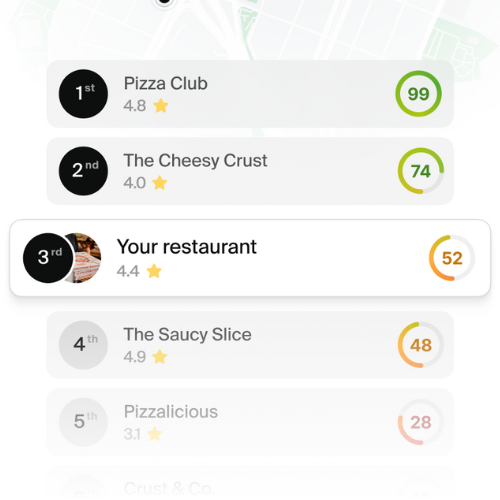
- They track their star averages and review velocity the same way they track covers and revenue.
- They use technology to handle the volume — so no review goes unanswered, even during service.
This is not a marketing department responsibility. It is an operational one, built into the rhythm of how the restaurant is run.
How RAY Helps You Manage Your Online Reputation
RAY is a restaurant technology platform built to help independent restaurants and small chains compete on equal footing with larger operators. Beyond tools for online ordering and direct delivery, RAY helps restaurants own their digital presence — including their review strategy.
With RAY, you can manage your Google Business Profile, automate customer follow-ups, and keep your online presence sharp without needing a dedicated marketing team.
If your review profile is not working hard enough for your restaurant, explore what RAY can do for you — and start building the kind of online reputation that fills tables.